
I still remember the moment I stood in the grocery aisle, staring at a brightly-packaged snack bar, feeling a mix of hope and confusion. On the front it promised to be “gut-friendly”, “full of fibre”, even “digestive health support”. Yet when I turned the package and read the fine print, the ingredient list looked anything but simple. And that’s when I realized: if we want a healthy gut, we need to decode ingredient labels—because what’s inside matters as much as what’s promised on the front.
In this post I’ll guide you, step-by-step: how to read ingredient labels for gut health, the science behind why certain ingredients matter (or don’t), and how to apply this in your shopping and daily life. Dive in if you’re ready to learn how to spot gut-friendly foods and avoid gut-unfriendly hidden ingredients.
Table of Contents
1. Why Learning How to Read Ingredient Labels Matters for Gut Health
The gut ecosystem
Your gut isn’t just a “tube” that digests food. Within it lives an entire ecosystem of trillions of microbes—bacteria, yeasts, archaea—that help digest fibre, produce short-chain fatty acids, regulate inflammation, and support your immune system. When the balance of this microbiome is disturbed, you might experience bloating, irregular bowel habits, low energy, skin troubles—and even mood changes.
Food as fuel and as signal
What you eat becomes fuel for your body and for your microbes. Processed foods, additives, excess sugar, artificial sweeteners, and low-fiber ingredients can negatively impact gut health. Conversely, real whole foods rich in fibre, prebiotics, and minimal additives support a healthy gut. By reading ingredient labels carefully, you can steer your diet towards microbes that serve you, rather than those that harm your gut.
Labels: your health-hack tool
People often focus on front-labels like “natural”, “organic”, or “gut-friendly”. But the real information lies on the back: the ingredient list and the nutrition facts. According to experts, front-of-package claims can be misleading. By mastering the label, you gain more control over what your gut ecosystem is exposed to.
2. Key Components of Ingredient Labels: Anatomy & What to Look For
2.1 Serving size and servings per container
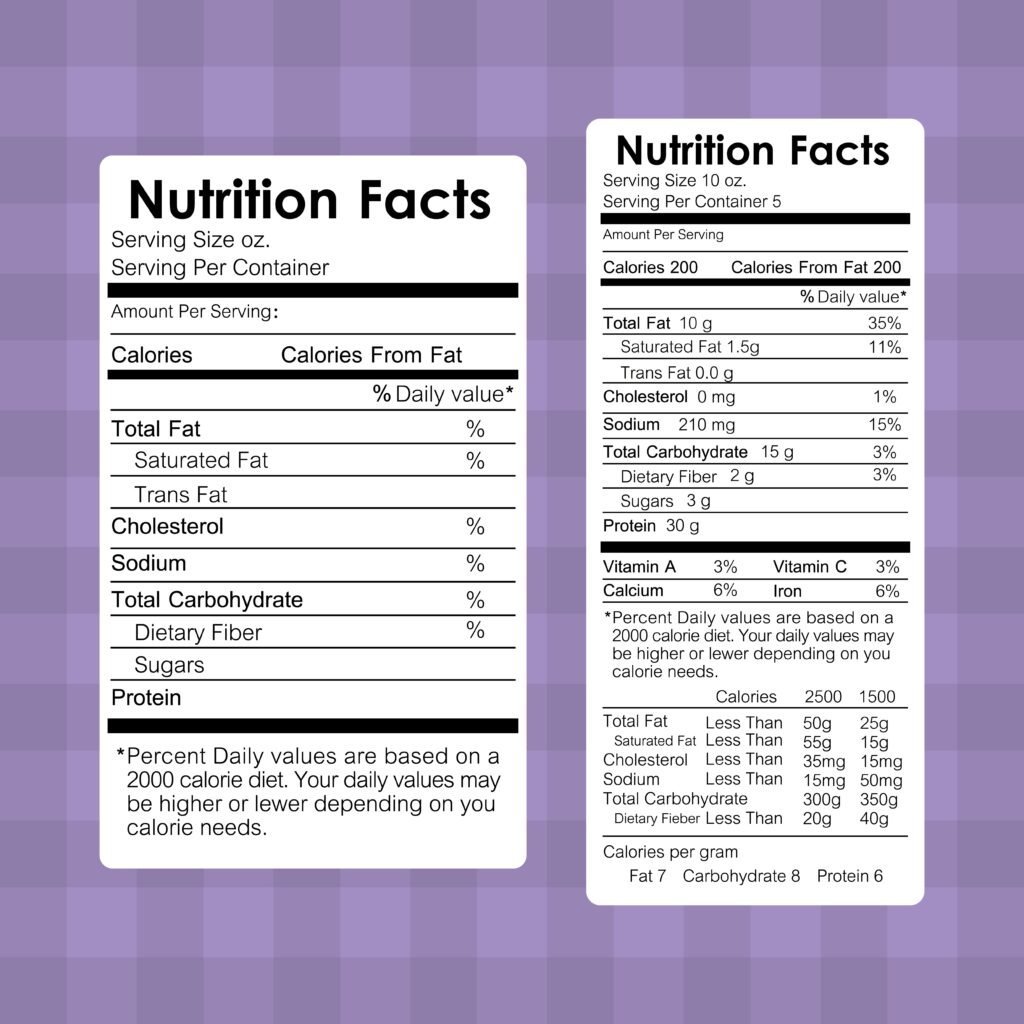
Before diving into ingredients, check the serving size and number of servings. Many products appear low in sugar or calories per serving, but if the package contains multiple servings—and you eat the whole thing—you’ll actually consume much more.
For gut health, this matters: perhaps a snack bar claims only 3 g sugar per serving, but eating two servings doubles that and may disturb blood-sugar and gut microbe balance.
2.2 Nutrition facts: fiber, sugar, fat, sodium
From a gut-health perspective, the numbers I pay most attention to are:
- Dietary fibre: A high-fibre diet supports gut bacteria that produce beneficial short-chain fatty acids.
- Added sugars: Excess sugar can promote growth of less beneficial microbes and may increase intestinal permeability (“leaky gut”). The label must list added sugars.
- Saturated/trans fats & sodium: While not always directly linked to gut microbes in every study, high levels often come with processed foods and additives that may undermine gut health.
- Protein & other nutrients: While protein is important, for gut microbiome balance, fibre and the type of carbohydrate often matter more.
2.3 Ingredient list: the heart of the matter
The ingredient list reveals what’s inside in descending order by weight. That means the first ingredient is present in the largest amount.
For gut-health minded label reading, pay attention to:
- Whole-food ingredients (e.g., whole grains, legumes, seeds, nuts) near the top.
- Refined grains, “enriched flour”, multiple sugars, or hydrogenated/partially hydrogenated oils early on = red-flags.
- Additives: artificial colours, artificial flavours, preservatives, emulsifiers, stabilisers—some of which may affect gut lining or microbe balance.
- Multiple names for the same thing: sugar may hide as “maltodextrin”, “fructose syrup”, “high-fructose corn syrup”, “glucose syrup”, etc.
- Shorter vs long list: A shorter, simpler ingredient list tends to indicate less processing. Conversely, long lists of unfamiliar chemical names = more processed.
2.4 Claims vs reality
Terms like “natural”, “multi-grain”, “whole grain”, “low fat”, “gut friendly” sound nice—but don’t always mean much. For example, “multi-grain” can still be entirely refined flour, “natural” may mean nothing regulated.
Thus: focus less on the front-label claims, and more on the back-label data.
3. What to Avoid for a Healthy Gut: Hidden Pitfalls in Ingredients
3.1 Refined grains and low-fibre carbs
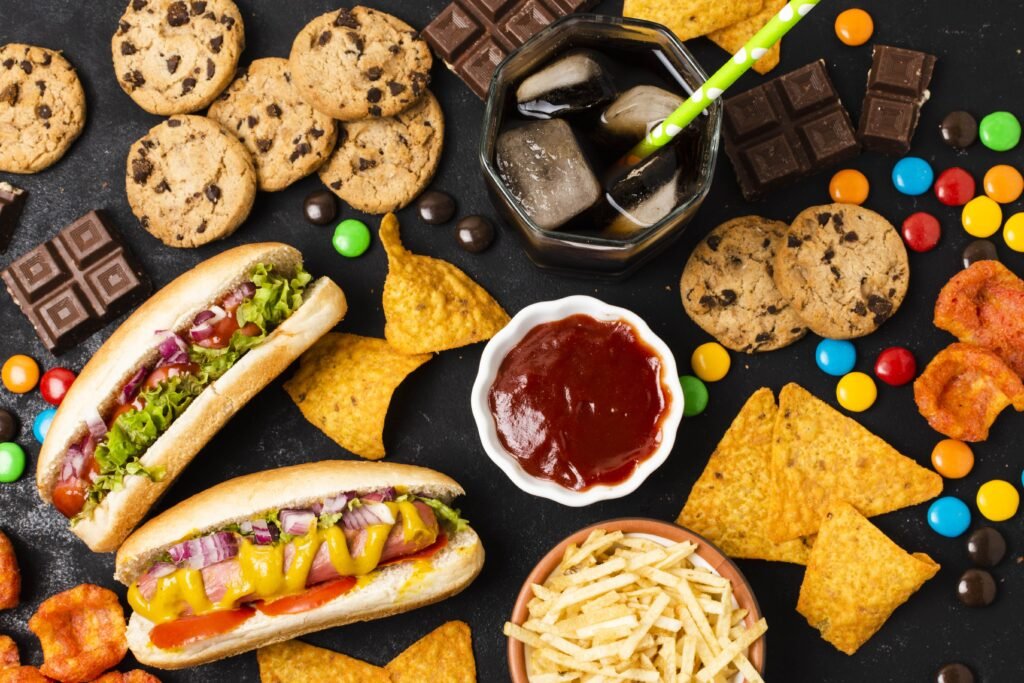
Refined grains provide less fibre for your gut microbes. If the first ingredient is “refined wheat flour”, “white rice flour”, or similar, you’re not getting the gut-supporting fibre you might hope for.
Ask: is “whole” or “whole grain” the first ingredient?
3.2 Added sugars and hidden sweeteners
Excess added sugar is a big red flag for gut health. It can promote imbalance in gut microbiota. Sugars can be disguised in many names: dextrose, maltose, corn syrup, fructose syrup, etc.
If the first few ingredients are sugar or one of its many aliases, consider alternative.
3.3 Artificial additives, emulsifiers and preservatives
Some ingredients commonly used in processed foods—emulsifiers, artificial sweeteners (e.g., sucralose, aspartame), thickening agents, artificial colours—are increasingly scrutinized for their impacts on gut microbiota and gut-lining integrity.
While not all have irrefutable evidence in humans yet, from a precautionary standpoint: if an ingredient list is littered with chemical names you don’t recognize, that’s a sign to steer clear.
3.4 “Low-fat”, “light”, or “reduced sugar” gimmicks
Foods marketed as “light” or “low fat” sometimes compensate by adding more sugar, additives, or refined starch to maintain taste.
For gut health: often better to focus on whole-food versions rather than “modified” processed versions.
3.5 Long ingredient list with “unpronounceables”
A good heuristic: if you cannot pronounce half the ingredients, or it reads like a chemical inventory, that product is more processed. Simpler is usually better.
4. What to Choose for a Healthy Gut: Label Reading with a Gut-Focus
4.1 Prioritize fibre-rich ingredients
Look for words like: “whole grain flour” (rather than “enriched wheat flour”), oats, barley, brown rice, quinoa, flaxseed, chia, legumes. These ingredients feed beneficial gut microbes which produce short chain fatty acids (SCFAs) like butyrate, propionate—key for gut health.
If the nutrition facts show at least 5 g dietary fibre (for one snack serving) that’s a good sign. According to American Diabetes Association, “high fibre” is 5 g or more per serving.
4.2 Whole-food ingredients early on the list
If the first ingredient is a real food (e.g., “rolled oats”, “whole wheat flour”, “almond flour”, “brown rice”) that’s a major plus.
If the first ingredient is sugar, refined flour, “modified starch”, then you know you’re not choosing the ideal gut-friendly product.
4.3 Minimal additives, simple list
Choose products where the ingredient list is concise, and consists of items you recognize. Example:
“Whole oats, almonds, flaxseed, chia seeds, honey, sea salt.”
This is far better than:
“Enriched wheat flour, sugar, hydrogenated vegetable oil, maltodextrin, artificial flavours, soy lecithin, etc.”
4.4 Prebiotic and probiotic supporting ingredients
Some products may list inulin, chicory root fibre, resistant starch, fermented ingredients. These are positive signs for gut-health support.
While the label may not say “good for gut microbiome” explicitly, the presence of known prebiotic fibres is a strong indicator.
4.5 Check sugar and sodium levels
For gut health, lower added sugar and moderate sodium are wise. High sugar may disrupt microbial balance; excess sodium often comes with processed foods heavy on additives.
Aim for something like: “Added sugar: < 5 g per serving” (depending on portion) and sodium not over-an entire day’s worth in a single snack.
4.6 Choose products where “whole grain” or “whole food” is the first or second ingredient
Many product labels use “whole grain” somewhere in the list but only in small amounts. If “whole grain” appears after many refined ingredients, the product still might be mostly refined grains. Look for a “whole grain first” or near-first position.
5. A Walk-Through: Real Label Reading Example
Let’s go through a mock scenario of reading a label with gut health in mind.
Product A: “Chocolate granola bar”
- Serving size: 1 bar (30 g)
- Calories: 140
- Dietary fibre: 3 g
- Added sugar: 8 g
- Ingredient list (in order):
- “Enriched wheat flour (wheat flour, niacin, iron, thiamin mononitrate…)”
- “Sugar”
- “Vegetable oil (canola, palm kernel)”
- “Soy protein isolate”
- “Chocolate pieces (cane sugar, cocoa mass…)”
- “Artificial flavour”
- “Soy lecithin”
- “Salt”
- “BHT (preservative)”
Analysis:
- First ingredient is enriched flour – so mostly refined grain.
- Sugar is second – not ideal for gut-friendly snack.
- Added sugar is 8 g = modest amount but combined with refined grain and oil.
- Fibre only 3 g – low for a gut-support snack.
- Presence of artificial flavour and preservative indicates processing.
Conclusion: From a gut-health standpoint, I would look for a better snack option.
Product B: “Almond & Oat whole-grain snack”
- Serving size: 1 bar (35 g)
- Calories: 150
- Dietary fibre: 5 g
- Added sugar: 4 g
- Ingredient list:
- “Whole grain oats”
- “Roasted almonds”
- “Chia seeds”
- “Honey”
- “Flaxseed”
- “Sea salt”
- “Natural flavour (vanilla)”
Analysis:
- First ingredient: whole grain oats – great.
- Fibre: 5 g – makes it a “high fibre” snack (for one bar) which supports gut microbes.
- Added sugar: only 4 g – low comparatively.
- Ingredient list is short and recognizable.
- Seeds and nuts add prebiotic fibres and healthy fats.
Conclusion: This snack is much better for gut health based on label.
By doing this kind of comparison, you’ll quickly develop a gut-health label reading “instinct”.
6. The Science: How Ingredients Affect Gut Health
6.1 Fibre, short chain fatty acids & microbiome
When you consume dietary fibre (especially from whole grains, seeds, legumes), gut microbes ferment some of that fibre and produce short-chain fatty acids (SCFAs) like butyrate, acetate, propionate. These SCFAs support the gut lining, reduce inflammation, and promote diversity of beneficial microbes.
Choosing whole foods that list fibre-rich ingredients helps supply substrates for this process.
6.2 Added sugars, refined carbs & dysbiosis
Diets high in refined carbs and high sugar promote rapid absorption, less substrate for beneficial microbes, and may favour more opportunistic bacteria. Over time this imbalance (dysbiosis) can lead to gut-lining issues and low-grade inflammation.
Thus, reading ingredient lists that lead you away from sugar-heavy, refined-grain foods is scientifically grounded.
6.3 Additives, emulsifiers & gut barrier
Emerging research (though still evolving) suggests that certain emulsifiers, artificial sweeteners, thickening agents may alter the gut-microbe environment or weaken the mucus layer of the gut, making the barrier more permeable. While definitive human data is still limited, opting for simple-ingredient foods is a wise precaution.
The readability of ingredient lists has been studied: in one analysis of U.S. branded foods, authors found ingredient-list readability was often poor which impedes consumer decision-making.
As a result, the simpler and more understandable the list, the better for making informed gut-health friendly food choices.
6.4 Whole food synergy and nutrient profile
Foods that have multiple beneficial ingredients (whole grains + seeds + nuts + minimal processing) not only supply fibre but also nutrients like magnesium, zinc, polyphenols, antioxidants—all supportive of gut health.
When the first few ingredients are whole-food based, the nutrient matrix tends to be richer and more holistic for supporting the gut and overall health.
7. Step-By-Step Guide: Label Reading Sequence for Gut Health
Here’s a practical sequence you can follow each time you pick up a packaged food:
- Check serving size & servings per container: Multiply if you’ll likely eat more than one serving.
- Scan the nutrition facts: Focus on dietary fibre, added sugar, sodium, total carbs.
- Read the ingredient list (first three ingredients): Are they whole-food based? Are sugars or refined grains high up?
- Look for hidden sugar names and additives: If sugar or refined starch appears early, red flag.
- Count ingredients roughly: Shorter list often = less processing.
- Ignore front claims until you verify back label: Don’t be seduced by “multi-grain” or “digestive health” claims—verify the actual list.
- Compare two similar products: Higher fibre + simpler list wins.
- Ask: Does this support my gut health? If yes, purchase; if uncertain, move on.
You can think of this sequence as your “gut-health label scanner”.
8.Bringing It All Together: Your Gut-Health Label Checklist

Here’s a handy checklist you can print or save on your phone:
- ✅ Serving size clearly understood (and multiples calculated if you’ll eat more)
- ✅ Dietary fibre ≥ 3-5 g (for snack/meal)
- ✅ Added sugar as low as possible (ideally < 5 g per serving for snack)
- ✅ First ingredient is a whole-food (e.g., “whole grain oats”, “whole wheat flour”, “rolled oats”, “almonds”)
- ✅ No sugar/refined grain/corn syrup at top of list
- ✅ Short ingredient list (preferably < 8 ingredients)
- ✅ Ingredients are words you recognize (no long chemical names)
- ✅ No or minimal unfamiliar additives, emulsifiers, preservatives
- ✅ Compare with similar products and choose the best for your gut
- ✅ Front claims (like “gut friendly”, “whole grain”) validated by checking back label
Use this every time you shop—and soon you’ll be doing it automatically.
9. Future Trends & What to Watch For
- Clean-label movement: More brands are simplifying ingredient lists, removing artificial additives, emphasising transparency.
- Prebiotic and microbiome-support labels: Some foods will begin to explicitly label “prebiotic fibre”, “resistant starch” or “supports gut microbiome”. These are promising but still require label reading to verify.
- Personalised gut-health foods: As gut-microbiome science advances, foods tailored to specific gut-microbe profiles may enter the market—meaning label reading will become even more important.
- Ingredient technology and hidden additives: Some new additives may disguise themselves under complex names—stay vigilant. The readability of ingredient lists remains a key issue.
Final Thoughts
Reading ingredient labels isn’t a chore—it’s one of the most powerful things you can do for your gut health. By shifting your mindset from “what’s marketed” to “what’s inside”, you reclaim agency over your food decisions and support your microbiome, your digestion, your energy and your overall wellbeing.
Start with one small category this week—perhaps just snacks or cereals—and apply the label-reading checklist above. Celebrate your wins. Notice how your body responds: less bloating, more regularity, steadier energy. Over time, those small changes compound into major gut-health improvements.
Your gut deserves the best—and reading ingredient labels is one of the best things you can do to give it exactly that.
Frequently Asked Questions
Q1. What should I look for first when reading an ingredient label for gut health?
A1. The first things to check are: the serving size (so you know how much you’re actually consuming), the nutrition facts (especially fibre, added sugars, sodium) and then the ingredient list (which shows ingredients in descending order by weight).
For gut-health specifically, I recommend finding an ingredient list whose first ingredient is a whole-food (e.g., “whole grain oats”, “brown rice flour”, “almond flour”) and a fibre content of at least ~3-5 g per serving.
Q2. Does “no added sugar” or “gluten-free” mean a product is automatically good for gut health?
A2. No — these claims do not guarantee gut-health friendliness. “No added sugar” might still mean high natural sugar from fruit concentrates; “gluten-free” often only means free of wheat/rye/barley but may still be highly processed, low-fibre, and contain additives that can disturb the gut.
So, always look at the back label: the actual ingredient list and fibre/sugar numbers matter more than front-claims.
Q3. What fibre amount per serving is considered good for supporting the gut microbiome?
A3. A good rule of thumb: aim for at least 3 g of dietary fibre per serving in packaged foods and ideally 5 g or more when you can get it.
Foods with higher fibre feed beneficial gut bacteria and promote short-chain fatty acid production, which supports gut lining integrity and microbial diversity.
Q4. What are some hidden ingredients or additives that I should avoid for gut health?
A4. Some of the “red flags” include:
- Multiple types of sugar (high-fructose corn syrup, maltodextrin, glucose syrup) listed early in the ingredients.
- Sugar alcohols or polyols (-ol names) which can ferment in the gut and cause bloating/gas.
- Emulsifiers, thickening agents, stabilisers (e.g., carrageenan, polysorbate, gums) that may affect gut barrier or microbial balance.
- Long ingredient lists filled with chemical-sounding words. Simpler lists are generally better.
Q5. How important is the order of ingredients on the label for gut health?
A5. Very important. Ingredients are listed by weight from largest to smallest. That means the very first ingredient is the dominant one. If “refined flour”, “sugar” or “vegetable oil” appears first (or among the first three), the product is less likely to be beneficial for your gut.
Ideally you want “whole grain flour”, “whole oats”, “nuts/seeds”, legumes, or similar near the top.